.jpg)

For the past decade, embedded payments have helped digital platforms unlock new revenue streams while delivering better customer experiences. Whether you’re a marketplace or a PSP, the ability to move money seamlessly has become a baseline expectation, rather than a differentiator.
In 2026, that version of embedded finance is no longer enough. With tightening transaction margins, low switching costs and fragile merchant loyalty, the next phase of value creation is embedded financing.
The scale of the opportunity is hard to ignore: the global embedded finance market is forecast to exceed $138bn by 2026, with embedded capital alone projected to reach up to $90bn. For marketplaces and software platforms embedded finance transactions are expected to surpass $7tn over the same period, signalling that a once-peripheral revenue stream is becoming a core pillar of platform economics.
Churn is high, loyalty is shaky
Payments used to be a powerful lever for growth – twenty years ago, card payment fees could be as much as 2-2.5%. Today, in most mature markets, the average transaction fee hovers around 0.5%.
Payments have become a commoditised infrastructure; new entrants undercut incumbents with no- or low-fee introductory offers and marginally lower rates to win market share. For merchants under pressure – for instance, a salon owner whose clients make less frequent appointments due to the increased cost of living – those marginal gains can be all it takes to switch providers.
This creates a high-churn, loyalty-thin environment for providers who compete primarily on price. According to McKinsey, 60% of SMEs say they would switch providers to access better integrated financial services.
For platforms competing primarily on price, this presents a threat. If transaction pricing continues to trend downwards, what sustains margins? More importantly, what stops merchants from jumping ship?
Capital is a retention tool
Embedded financing changes this equation. Unlike payments, access to capital is not simply another product in the stack – it directly shapes whether a small business survives, stalls or flourishes.
By embedding capital into the platforms merchants already use, funding becomes part of how a business operates, rather than a separate financial process like applying for a standalone loan. Capital shows up inside existing workflows, aligning with how the business is actually performing day to day, and repayments happen automatically via revenue share or scheduled deductions, rather than manual transfers or external monthly invoices.
The retention effect is powerful: when funding, repayment and performance tracking are tied into the same system, switching platforms would disrupt cash flow, forecasting and growth, so merchants who rely on a platform for funding are less likely to churn.
In practice, embedded finance can reduce merchant churn by up to 75%, with leading platforms reporting up to 80% uplift in merchant retention once capital is embedded into core workflows. YouLend’s data reflects this effect: merchants funded through that platform show a consistent 85% renewal rate globally.
This sets off a positive cycle: funding enables growth, growth increases transaction volume, higher volumes improve underwriting, and underwriting unlocks further access to capital. In a market where switching providers is easy, embedded financing introduces some friction; if a merchant’s growth depends on your platform’s capital, leaving becomes a more difficult decision.
The pitfalls of in-house lending
Plenty of large platforms attempt to build their own financing solutions and, in a single market, this can work. A platform can launch a basic program, but it’s often difficult to scale and become a meaningful part of a platform’s product suite
What works well for the US does not necessarily extend to the UK or Europe, for instance. Each new market introduces new licensing, compliance, tax and operational complexity.
Risk management presents another challenge. Collections, defaults and portfolio health are unwelcome risks for businesses whose core offering is in software or payments rather than credit.
And even the world’s largest platforms have limited internal bandwidth. Dedicated embedded finance teams are specialised, expensive and difficult to scale globally. It’s particularly hard for public companies to justify allocating billions of dollars to lending versus investment in core products and R&D.
Combined, these challenges make it hard for promising pilots to expand, with internally built programmes often capping out just as demand accelerates. Partner-led models change the economics – with the right infrastructure, embedded financing programmes can go live in as little as 7 days, with financing approved within 24-48 hours.
We’re already seeing accounting and payments platforms choosing this model, embedding capital directly into core workflows without taking on balance sheet or regulatory risk. YouLend and Intuit’s recently launched Capital Marketplace, which connects QuickBooks UK customers with partners for financing, is one example of how platforms can offer fast, data-driven access to funding while staying focused on their core product.
YouLend has funded more than 370,000 businesses globally, providing $10bn in SME revenue, a level of reach that is difficult to replicate in-house.
Expanding the addressable market
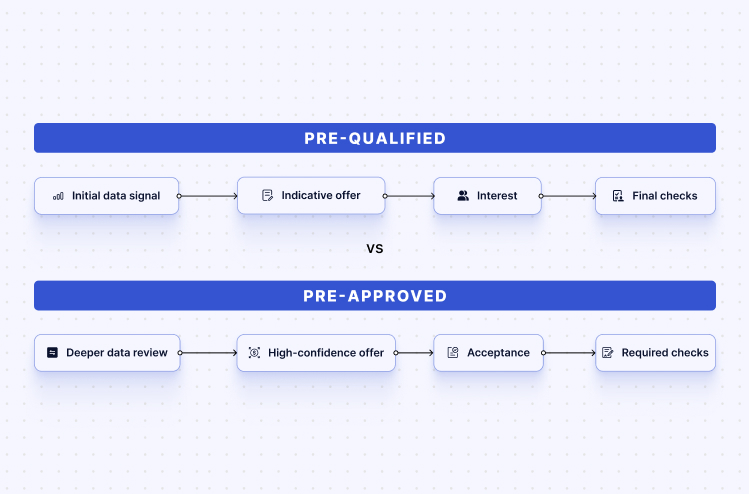
Beyond retention, embedded financing reshapes how platforms grow. Traditional lenders favour merchants with long trading histories or months of transaction data, delaying engagement with new businesses when they need capital most, and narrowing the addressable market.
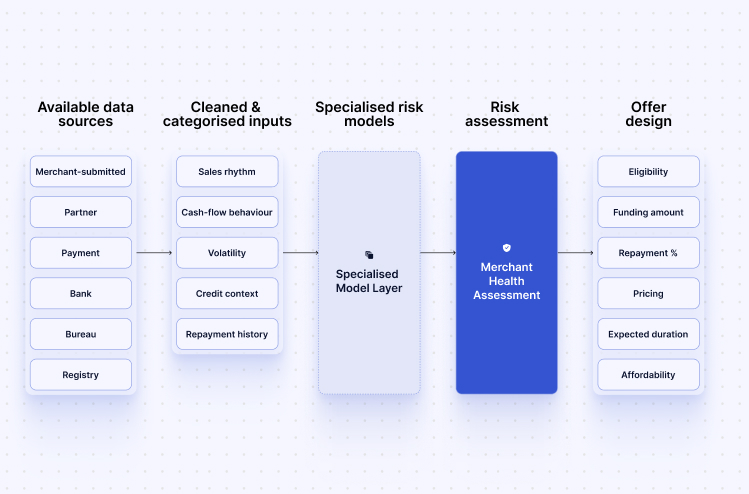
By contrast, embedded financing models can underwrite earlier in the merchant lifecycle, allowing platforms to introduce capital from day one. Financing becomes an awareness product as much as a financial one – signalling value, building trust and deepening relationships before competitors even enter the scene.
This is key, because many SMB owners are not actively seeking out finance while they’re busy running their businesses. But capital that appears inside the tools they already use removes friction and accelerates adoption. Merchants that receive embedded financing grow sales by an average of 26% in the six months following funding, with some seeing lifts of 25-50%.
This growth depends on access. YouLend’s underwriting model has a 90% approval rate, significantly higher than the UK SME lending average of 64%. Demand also reflects real trading patterns, with a 30% surge in financing applications ahead of peak periods such as Black Friday – vital capital that appears exactly when it is needed.
In short, earlier eligibility translates directly into activation, retention and a larger total addressable market.
The cost of waiting
Payments alone aren’t enough to sustain a platform against shrinking margins and aggressive competition. Capital, when embedded thoughtfully, seamlessly and responsibly, offers something payments can’t: a durable, compounding relationship with merchants.
Platforms that act early stand to benefit from higher lifetime value, lower churn and new revenue streams. Platforms that delay risk losing merchants to marginally cheaper providers. For digital businesses heading into 2026, it’s a question of how quickly they can do it well.









.jpg)